
How a Stirling Engine Works
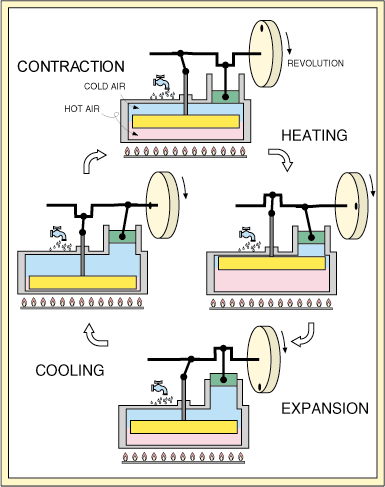
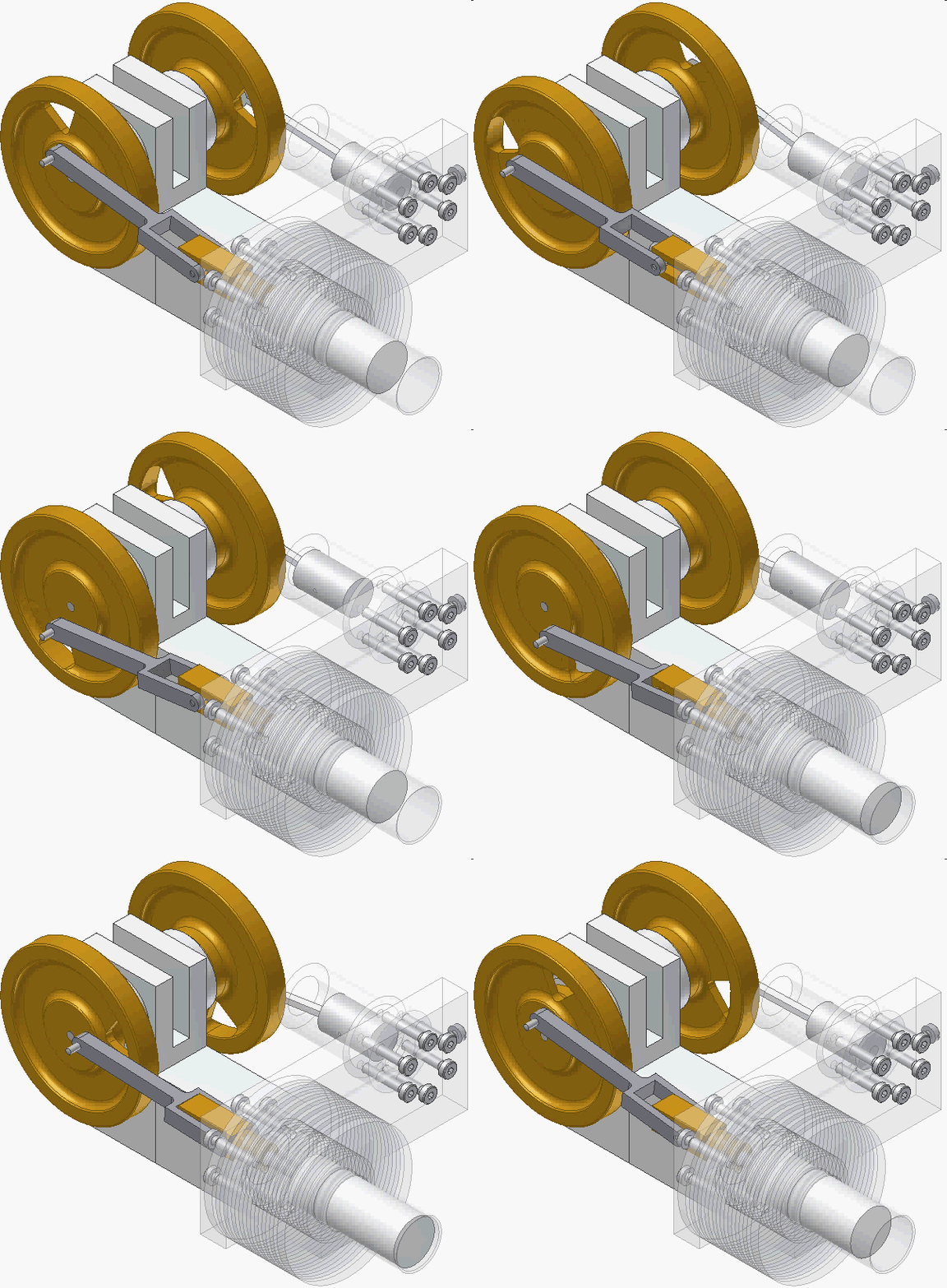
A Stirling engine is an external combustion engine that operates by the cyclical heating and cooling of a sealed working gas (usually air) within the cylinder. This illustration depicts the complete four-phase thermodynamic cycle.
1.Heating Phase (Gas Prepares to Expand)
The bottom of the cylinder is heated by an external heat source, and the air below (pink) is warmed and rises in temperature. At this stage, the displacer piston (yellow) is positioned at the bottom, keeping most of the gas in the hot zone; the air above (blue) is kept cool by the water spray device at the top.
2.Expansion Phase (Power Stroke)
The heated, expanding gas pushes the power piston upward, driving the flywheel into rotation. Simultaneously, the displacer piston moves upward, forcing all the gas into the hot end of the cylinder. This rapid expansion of the gas is the engine’s sole source of power.
3.Cooling Phase (Gas Prepares to Contract)
The inertia of the flywheel carries the cycle forward. The displacer piston moves downward, pushing the hot air to the top of the cylinder, where it is rapidly cooled by the water spray device. As the gas cools, its pressure drops sharply.
4. Contraction Phase (Cycle Reset)
The cooled gas, now at reduced pressure, creates a partial vacuum that pulls the power piston downward to its original position. The displacer piston returns to the top, leaving the cooled gas in the cold zone, ready for the next heating cycle.
This cycle of “heating → expansion and power → cooling → contraction and reset” repeats continuously, driving the flywheel in steady rotation. Unlike an internal combustion engine, the Stirling engine operates without any combustion or explosion occurring inside the cylinder.