
How a Steam Engine Works
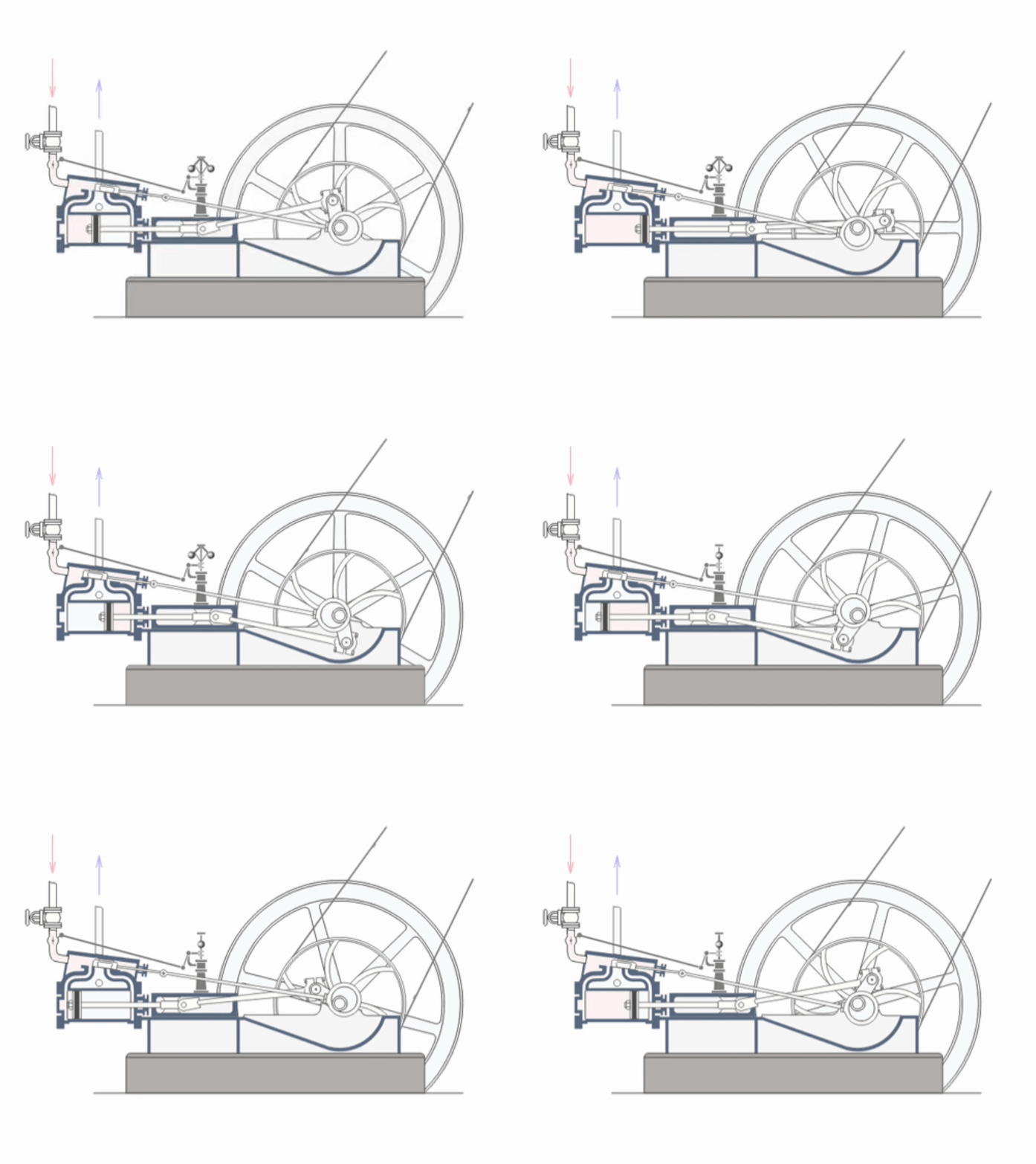
This illustration depicts a classic horizontal single-acting steam engine, the core prime mover of the Industrial Revolution.
1. Steam Generation and Admission into the Cylinder
High-pressure steam is generated by an external boiler and enters the engine through the steam inlet (red arrow). A slide valve mechanism, linked to the crankshaft, automatically controls the flow of steam.
When the valve opens, steam rushes into the left side of the cylinder, and the immense pressure drives the piston forcefully to the right.
2. Motion Conversion and Power Output
The linear motion of the piston is transmitted via the piston rod to the connecting rod, which in turn drives the crankshaft into rotation.
The large, heavy flywheel mounted on the crankshaft serves two critical functions:
▪ It converts the reciprocating motion of the piston into smooth, continuous rotary motion.
▪ It stores kinetic energy, enabling the engine to run smoothly even when the piston is at the dead points of its stroke.
3. Exhaust and Cyclic Return
As the piston moves to the right, the valve shifts, cutting off the intake and opening the exhaust port (blue arrow). The spent steam, now cooled and at reduced pressure, is pushed out of the cylinder by the piston.
The inertia of the flywheel carries the crankshaft past the dead point, and the valve immediately reverses. Steam is now admitted into the right side of the cylinder, driving the piston back to the left.
This cycle of “intake → expansion and power → exhaust” repeats continuously, driving the flywheel in constant rotation and providing power to machinery, pumps, or wheels.